
JD Doyle's Gay Agenda
JD Doyle built 23,000 pages of queer history from his home in Houston, and I fell down the rabbit hole.

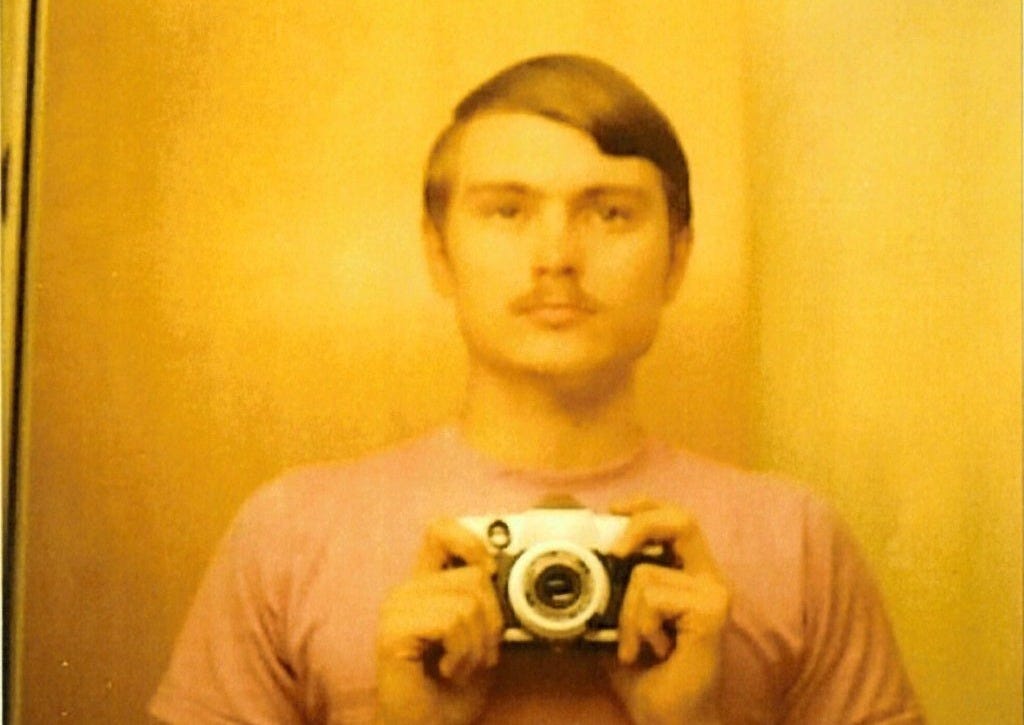
It’s hard to remember how I stumbled into the JD Doyle Archives. Probably a stray Reddit comment. The homepage felt like time-travel, its thorough HTML build reminding me of the Geocities pages I dug through as a teen. They held the miscellaneous stories and random information that made surfing the internet feel anthropological.
Regardless of how I found it, there I fell into the rabbit hole (self-described) built by JD Doyle, an archivist and activist based in Houston, Texas. I was immediately drawn into the expansive collection of PDF’s Doyle scanned of gay zines and publications from the 40s onward. Each scanned issue is fully hosted on the website, and the stories and photography likely exist only here in Doyle’s archive.
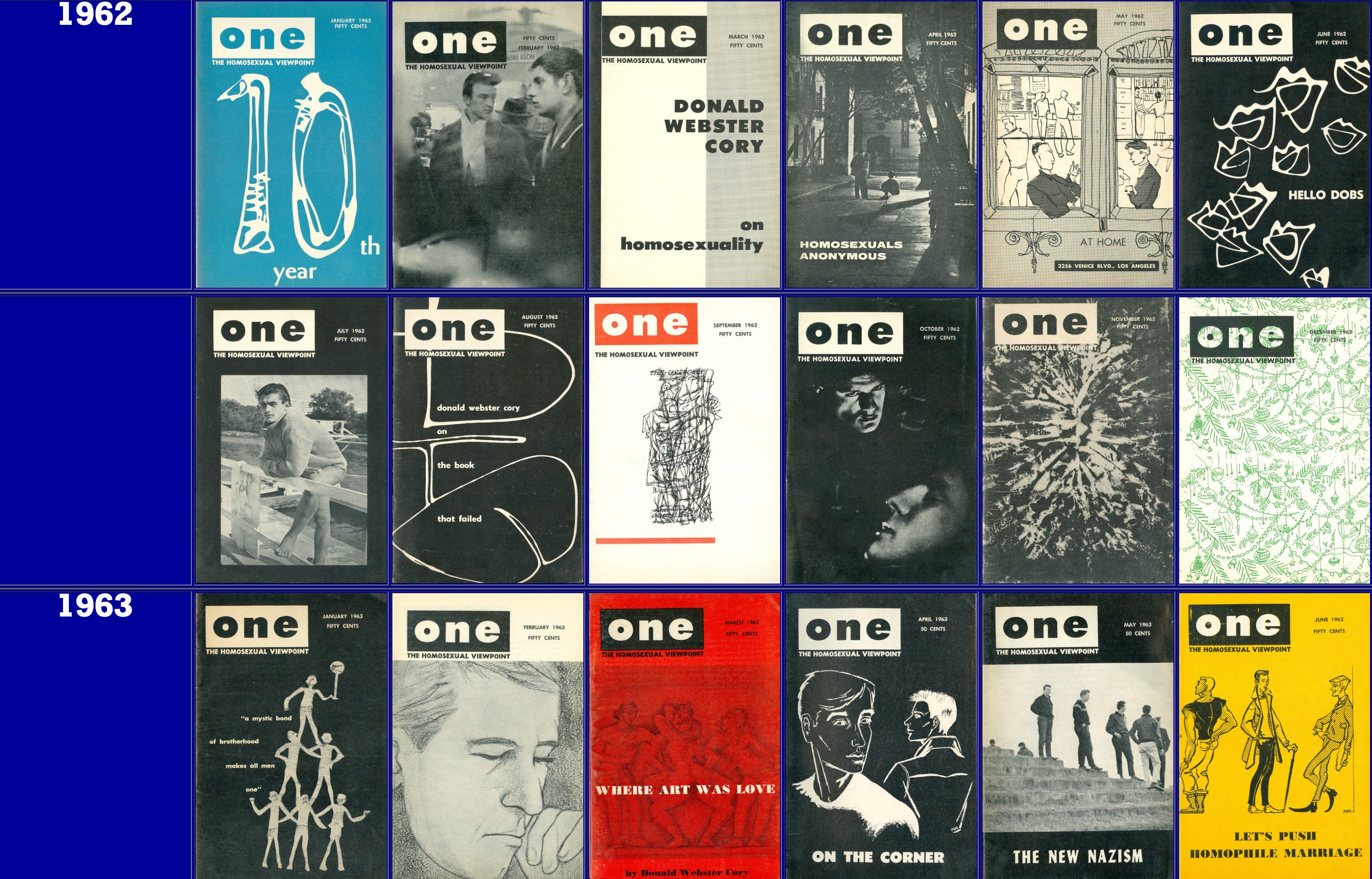
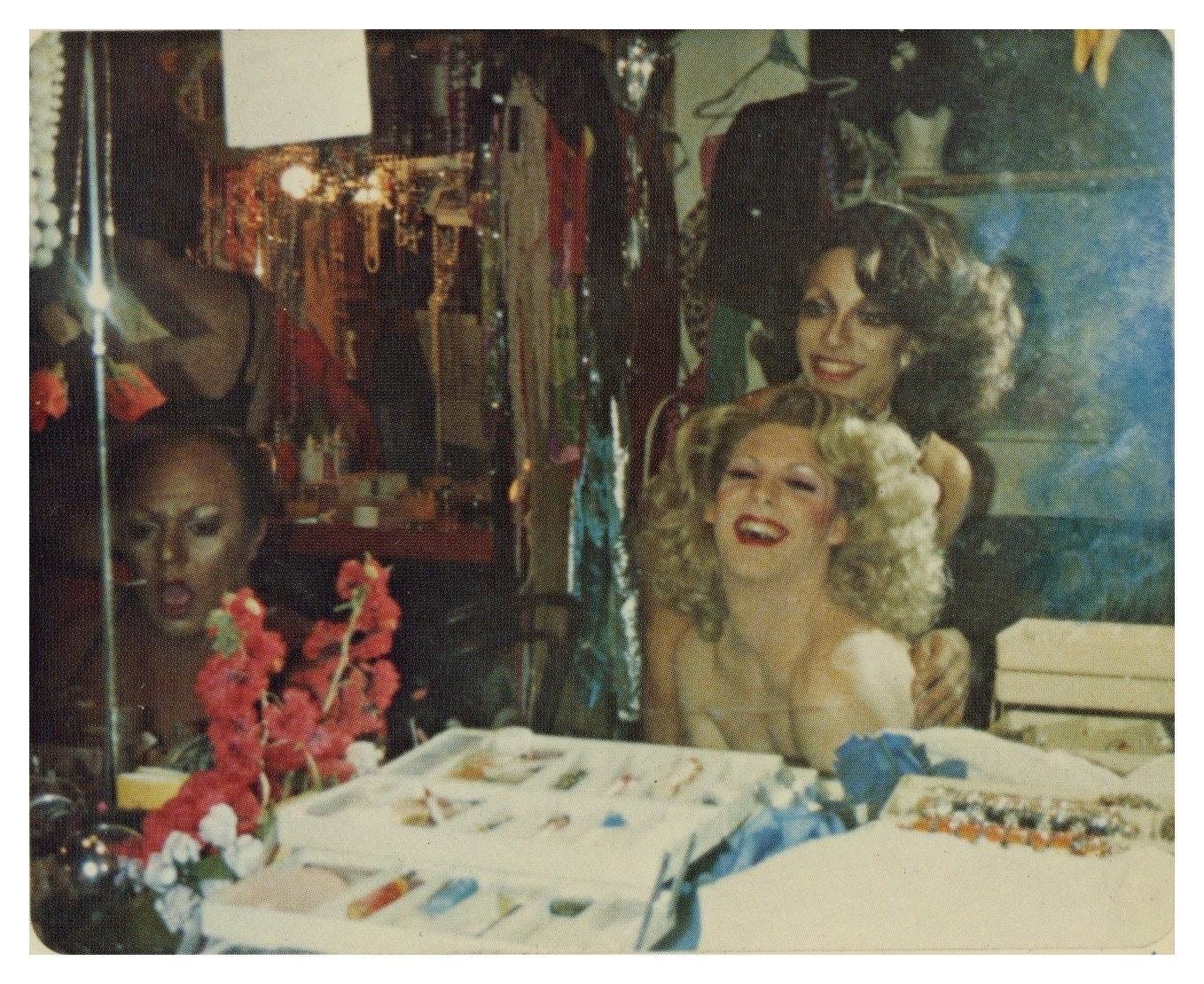
The photos covering many of the publications were sexy, the stories a transport to a way of gay life long past. Seeing images of packed clubs, bars and community spaces across Texas and reading stories of phone-free exploits across the country brought on a retroactive FOMO.
The site boasts 23,000 individual pages packed with gay newspaper clippings, hours of radio recordings, gay nightlife photography and more. Who built all of this?
JD Doyle is 78 years old. He was born in Salem, Ohio, studied chemical engineering, and came out in Norfolk, Virginia in 1978. Within a year, he was editing the city’s gay newspaper. After some time in Rochester, Doyle ended up fleeing the winters for Texas in 1981. In Houston, he worked a day job at the IRS until he retired in 2010. Everything else happened off-hours.
“The mission of the JD Doyle Archives is to gather, digitize, and share LGBT music and Houston/Texas LGBT History,” reads the project’s mission statement.
Doyle’s work on the archive began in 2000, with the radio show “Queer Music Heritage” that Doyle himself hosted on KPFT Houston for 15 years, every episode of which is archived on his site. His “Gay Agenda” was lyrically gay music: “not Elton John or Melissa Etheridge”, but independent artists who had never been heard on the radio. He featured voices across the queer spectrum.
I spoke with Doyle in January:
“While it’s not a competition, I think I have the largest collection of that genre… For my radio show my Gay Agenda was always on lyrically gay music… if an artist sent me a CD or tape (yes there were cassette tapes then) and there was one lyrically gay song, well, that was very likely the one I played. I wanted to get our culture out there, and for people to be able to hear about our lives and stories. That was especially poignant for transgender artists. To interview them about their music and also about their journeys was a special treat for me. I once did seven transgender-themed shows in a row, I just felt driven to get those stories on the radio.”
Doyle’s foray into collection began in the 70s with RnB, girl group and Doo Wop records, becoming one of the largest girl group collections in the world for a time. He sold most by the 90s, but kept the “queer stuff.” He felt the queer material had no institutional home, so he built that institution himself.
“By the time I “retired” from radio, in 2015, after 15 years, my site had about 540 hours of downloadable programming.”
Doyle found that beyond the music, he also had extensive collections of photographs of pride parades from the 80s and digital scans of gay publications since lost to time. He felt the same pull to get “our culture” out there. Doyle built an offshoot site and called it “Houston LGBT History,” originally focusing on Houston and Texas centric ephemera but eventually expanding beyond those borders.
"I actively monitor eBay daily, and other sources as well. I have many specialty areas I love: publications of the 1970s, sheet music of female impersonators from the 1920s to the 1940s, tabloid magazines of homophobic articles, blues singers of lyrically gay material from the 1940s… it's a lot."
As a gay Texan, I was drawn to the history of the state I grew up in through a lens obviously not taught in the state’s public schools. Doyle builds an image of Houston, and Texas at large, as vibrantly queer: the community strong and joyful. My own memory of Texas is tinged with the homophobia that comes from a heteronormative, Christian upbringing. To re-engage with that history in a way that feels so fresh and affirming is genuinely revitalizing.
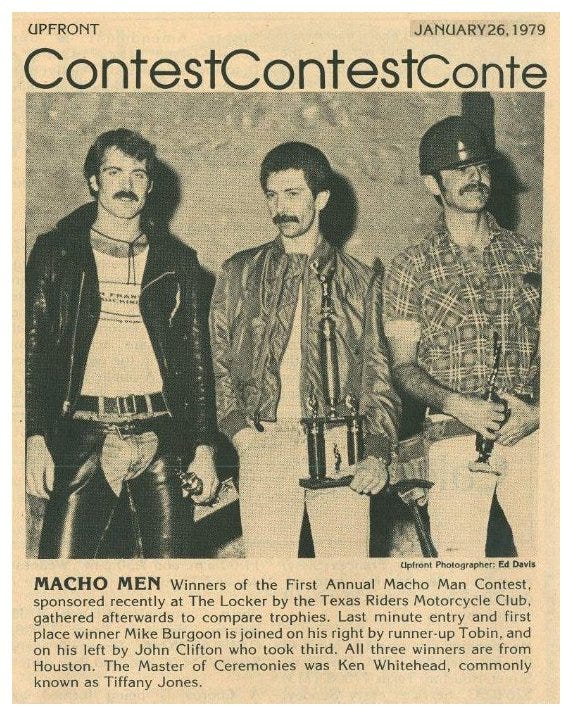
The third arm of the website is the Texas Obituary Project: over 8,300 obituaries, mostly sourced from This Week in Texas, a statewide weekly magazine that ran from 1975 to 2000. The majority are AIDS-related. In Houston’s Montrose bars in the late 80s and early 90s, patrons would pick up the latest issue of TWT and go straight to the back pages first, scanning for names they recognized.
Doyle took those pages and gave each person their own entry in a searchable database: name, cause of death (ie AIDS, violence, etc.), city, race, gender, and partner’s name if known. He tells me he regularly receives emails from people who had lost track of an old friend and suspected they’d died of AIDS but had no way to confirm it. From the tone of the messages, he can tell the person was crying. His archive gave them an element of closure, sometimes decades after the loss. “No one else was going to do it,” he says, “so I did.”
“I would add clippings, because I will research these people and find what else is there to know besides their death. Are there earlier pictures? Were they in the gay caucus? Were they in the chorus? Were they in the bowling league?”
To sit with the items in the JD Doyle Archive is to wonder how they even exist. No institution commissioned them. Doyle built this collection with the sole desire to give back to the community and keep the history alive. He archived in his spare time, and paid his own server fees. It was only decades after his work started that the US Library of Congress asked to include his website in their own collection of LGBT history, and the archives became a 501c3 non-profit.
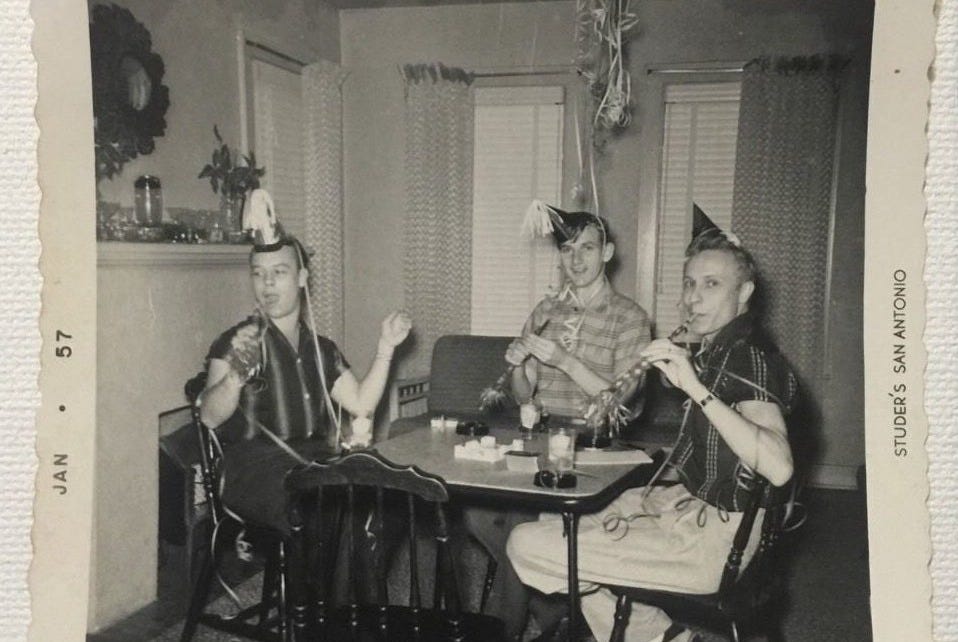
The old web was structurally hospitable to this kind of project in a way the current internet isn’t. A Squarespace site, a Notion page, an Instagram account could not hold what Doyle built, not just in volume, but in the way all pieces relate to each other. The rabbit hole is the architecture. Getting lost in the information Doyle has organized is a feature: it mirrors how history actually works, through tangents, adjacent discoveries and finding things you weren’t looking for.
I feel like I tapped into a parallel history from the one I knew while living in Texas, one whose evidence now largely exists only on this server.
Through the archive, I discovered that an Indian restaurant where I’d have group dinners near campus at UT used to be a gay sauna, likely shuttered in the mid-80s as part of the broader bathhouse closures tied to AIDS-era fear.
Through the Texas Obituary Project, I read about the murder of David Morrison in Denton, my hometown, while I was growing up. The jury acquitted his killer on the grounds of self-defense, because Morrison had come onto him, despite evidence the two had a relationship.
In the modern Texan political landscape, these histories and gay institutions are at risk due to the aggressive social overreach of the Republican party. Texas Governor Greg Abbott recently ordered the removal of rainbow crosswalks from Houston’s Montrose neighborhood on the grounds of “safety and consistency,” and further threatening to cut off state and federal funding for any city that didn’t remove “any and all political ideologies from streets.”
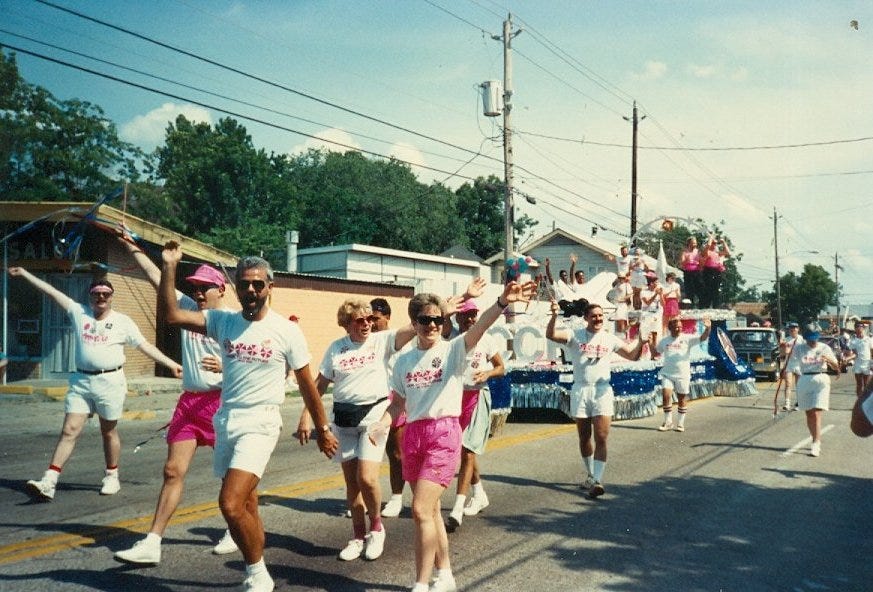
These spaces are also at risk of shifting social norms within the queer communities that once kept them alive.
“I am always adding sections to the History site, on my home page you can find a tab for “what’s new,” where I list in “recent order” new additions, as there is so much that would not be noticeable….like features on the histories of particular bars, mostly now closed, that were important to our community. I finally this month got around to covering the Pearl Bar, the only remaining lesbian bar in Houston, out of only two in Texas.
The faces and places photographed, scanned and stored by JD Doyle are slowly fading from the real world. This makes his project all the more important. When discussing AI and a social tilt toward the misinformation of the modern digital era, Doyle worries historians won’t be able to tell real history from generated history. He uses AI narration on his site but labels it clearly. He’s not a purist; he’s a pragmatist with a sharp eye for what’s real and fact.
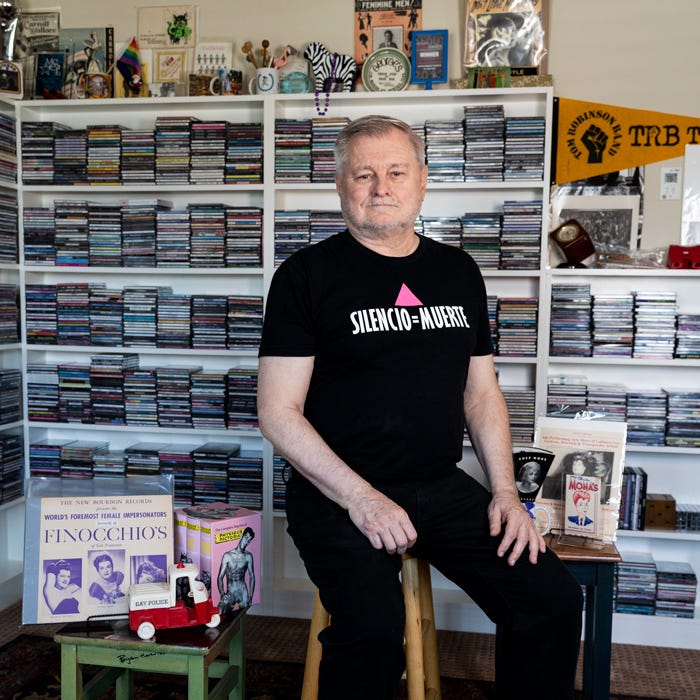
I spoke with Doyle over a Google Meet in mid-December. He sat in his home office, a pride flag behind him as well as political posters and a copy of his book. He mentioned that just out of sight were boxes and boxes of documents, many yet-to-be scanned by the “big” scanner he uses to fill the archive. While discussing his archival method, Doyle said:
“One of my missions was to let people know about the publications of our culture, that they existed. And if they want to research more on that publication or any of them, they have to know they existed. You can’t search if you don’t know it was there.”
You can’t search if you don’t know it was there.
Archives like Doyle’s are not just preserving the past. They're modeling something about how people can relate to their own history online: with patience, with dedication, and with a willingness to build something no one asked for. The worth of Doyle's project, whether to the queer community, to Texans, or to anyone who finds their way in, is that it exists at all.
Thanks for reading. I’d also like to plug Doyle’s book, “1981-My Gay American Road Trip: A Slice of Our Pre-AIDS Culture.”
In 1981, Doyle drove through 27 states and documented the gay bars, newspapers, and communities he found along the way. The result is his playful, intimate memoir of queer life in the window between Stonewall and AIDS, I highly recommend it.
And a massive thank you to JD Doyle not only for speaking with me, answering my myriad questions, but for also stepping in to help edit this piece. Working on this project with him has been the coolest part of building Lurkline so far. Follow him on Instagram or Facebook.